
What flight training really costs when you borrow for it.
Most people plan for the sticker price of flight training. Almost nobody plans for the interest. I borrowed about $90,000 for my training and aviation degree in 2010. By the time I paid it off, I had handed over roughly $222,000. This is the number nobody quotes you, and here is how it actually works.
My loans, 2010 to 2020
- Borrowed
- $90,000
- Paid back
- $222,000
- Extra (interest)
- $132,000
Ten years of interest on a six-figure balance, at an ordinary rate over an ordinary term.
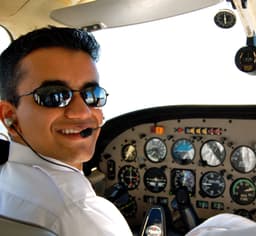
My $90K became $222K. Here is why.
I graduated in 2010 with an aviation science degree and my certificates. I also had about $90,000 in loans. It took me ten years to clear them. Over those ten years I paid roughly $222,000. The extra $132,000 was interest, compounding the whole time I flew.
That is not an unusual outcome. It is what happens when a large balance sits at a normal interest rate for a normal repayment term. The loan does not care that you are chasing a dream. It just compounds.
| Borrowed | Paid back | Extra (interest) | |
|---|---|---|---|
| My loans | ~$90,000 | ~$222,000 | ~$132,000 |
The lesson is simple. Every dollar you can avoid borrowing is worth far more than a dollar, because you never pay interest on it. That single idea should drive how you pay for training.
The gap that grows the debt
The other reason training debt runs high is that the quote is almost always too low to begin with. Most students are quoted the FAA legal minimum hours. Almost nobody finishes there. Real examiner data puts a typical Part 61 private pilot near 72 hours, not 40. Those extra 32 hours are real money, and if they are borrowed money, interest turns that gap into something much larger over the life of the loan.
So the first move is not finding a loan. It is knowing your number before you sign anything.
How to borrow less
You cannot always avoid loans. You can almost always shrink them. Work in this order.
Get the real number first.
Before you borrow a dollar, know what your certificate is likely to actually cost, not the minimum quote. Borrowing blind is how you end up funding 30 hours you did not budget for. Get your real cost projection.
Take the free money before anything else.
There is real scholarship money in aviation, and a lot of it goes unclaimed every year. Apply widely and stack several smaller awards. This is money you never repay and never pay interest on. Browse verified aviation scholarships.
Use your GI Bill benefits if you have them.
Veterans and eligible dependents can cover a large share of training. Spend these before you touch a loan. See what the VA covers.
Finance only the gap that is left.
Once free money and benefits are exhausted, borrow the smallest amount that gets you to your rating. Then track every dollar so the balance never drifts past the plan. Compare loans and monthly payments.
Next leg · Your plan
Borrow around a real number, not a guess.
The plan maps every step to your checkride with the cost built in, so what you borrow stays grounded in a real number instead of the minimum quote.
Already training? Track every hour and dollar in the app.

Loan questions
How much debt is normal for flight training?
It varies widely by path. A private certificate alone runs into five figures. A full career track through an aviation degree and the ratings can reach six figures, especially once interest is counted. To answer it for yourself, project your real cost first, then subtract any scholarships and benefits.
Is an aviation degree worth the loans?
It can be, but go in with eyes open. The degree plus training is where the largest balances come from, and interest can more than double what you borrow, as it did for me. Run the real numbers, take every dollar of free money first, and borrow only what is left.
Why did you pay back so much more than you borrowed?
Interest over time. A large balance at a normal rate over a normal term compounds into far more than the original amount. Ten years of it turned my $90,000 into roughly $222,000, about $132,000 of it interest.
How do I avoid ending up like that?
Three things. Know the real cost before you borrow. Exhaust scholarships and any GI Bill benefits first. Then finance only the remaining gap and track it as you fly.