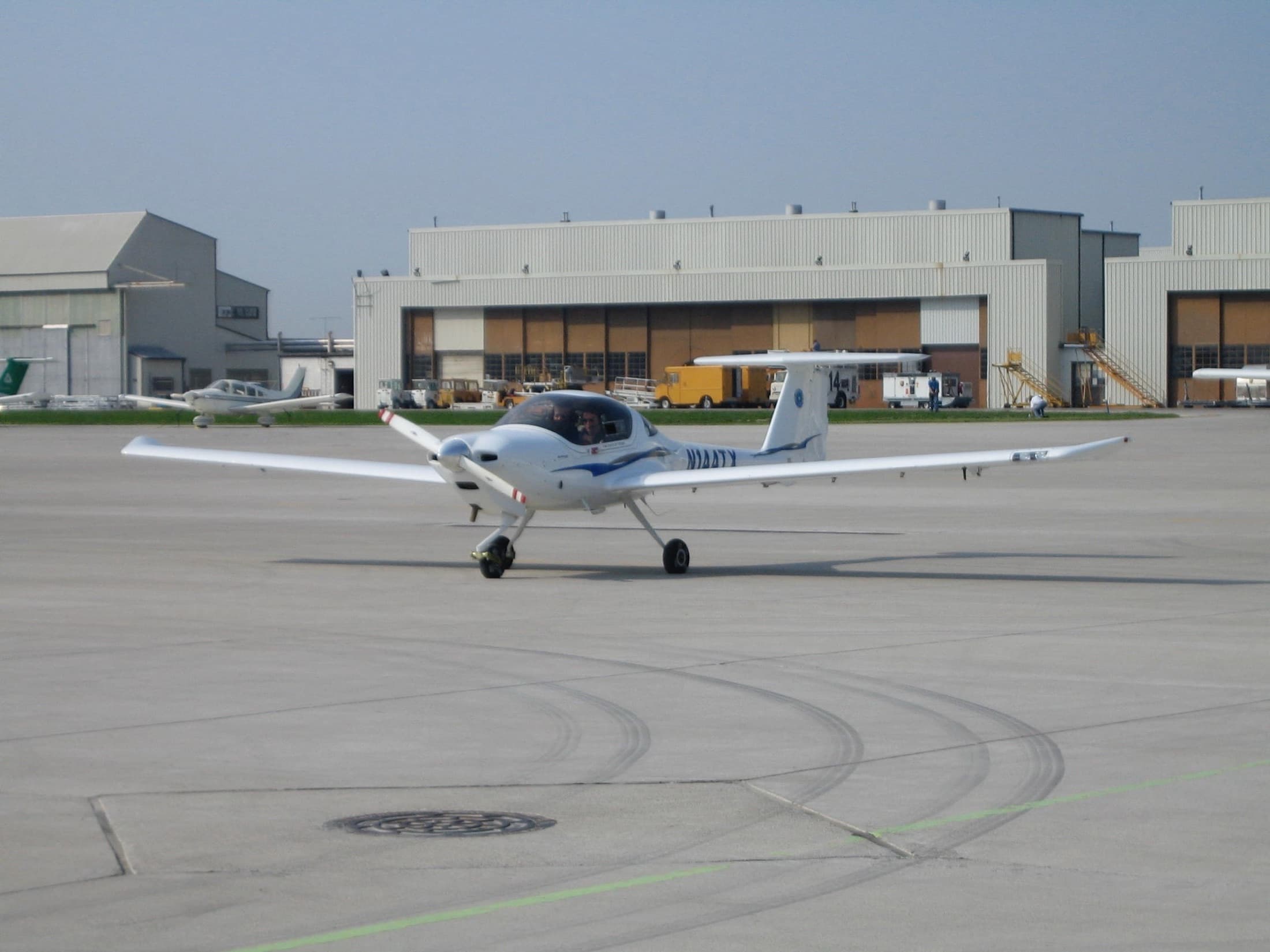

How many hours before your first solo?
The FAA sets no minimum number of flight hours before a student pilot flies alone. It sets a list of things you must be able to do, and it leaves the timing to one person: your instructor. Ask working instructors and the range runs from six hours to 40, and how often you fly decides more of it than talent does.
What the regulation actually requires
The rule is 14 CFR 61.87, and hours appear nowhere in it. Before a first solo it requires three things. First, a pre-solo knowledge test that your instructor writes and administers, covering the parts of the flight rules that apply to you, the airspace where you'll fly, and the flight characteristics and limitations of the airplane you'll fly; the instructor has to review every incorrect answer with you before signing you off. Second, flight training in fifteen listed operations for a single-engine airplane, from preflight preparation, taxiing and traffic patterns through slow flight, stall recovery, emergency procedures, slips to a landing and go-arounds, with your instructor determining you are proficient and safe in them. Third, logbook endorsements from an authorized instructor who gave you training in the specific make and model within the 90 days before the flight.
That last clause is why solo privileges go stale: the endorsement rides on training given in the preceding 90 days, so a student who stops flying has to fly with the instructor again before soloing again.
So how long does it actually take?
There is no official average, so the best sources are instructors who count. Writing in AOPA Flight Training, LeRoy Cook, an instructor teaching since 1965, reported soloing students in as few as six hours and as many as 40, and called the number an individual matter driven by lesson frequency and luck with weather. He also noted the old benchmark, a loose expectation of eight hours of dual instruction before solo, belongs to an era when pre-solo training covered less than it does now.
A second AOPA piece profiles John Dougherty, an instructor with roughly 18,000 flight hours, who kept notes on his students across 50 years and put the threshold of solo competence near 55 takeoffs and landings rather than any count of hours. That is one instructor's tally, not a formal study, but it explains the pattern schools see: a student flying two or three lessons a week solos in fewer total hours than one flying twice a month, because the landings stack up while the feel is still fresh.
The paperwork that has to be in place
Three documents, all of them before the endorsement matters. A student pilot certificate, which for airplanes requires being at least 16 (gliders and balloons: 14) and being able to read, speak, write and understand English. A medical: for airplane solo privileges that means at least a third-class FAA medical certificate, unless you fly under the BasicMed conditions; glider and balloon students are exempt. And the logbook endorsements from 61.87, current within 90 days.
The solo itself comes with hard limits: no passengers, nothing for compensation or business, visibility of at least 3 statute miles by day and 5 at night, visual reference to the surface at all times, plus whatever stricter limits your instructor writes in your logbook.
Landings are most of it
Look back at the fifteen required operations and most of the list is flown in the first few lessons. What fills the weeks before a solo is the last item on every flight: the landing, done again and again until the instructor would bet an airplane on it. The solo is an early milestone, not the halfway mark. The FAA minimum for the full private pilot certificate is 40 hours, and examiner data puts the typical Part 61 student closer to 72 at the checkride.
If you want to feel why the landing takes the repetition, we built a 90-second version of the problem: can you land a plane? It models the two mistakes that fill pre-solo lessons, getting slow and pulling the nose up, or arriving too fast to stay on the runway.
What the pre-solo hours cost, median published rates, 568 schools
Medians of the rates flight schools publish, from our directory. Checked October 20, 2026.
Opens the estimator.
First solo questions
Is there a minimum number of flight hours before you can solo?
No. For airplanes, 14 CFR 61.87 sets no minimum hours at all. It requires a pre-solo knowledge test that your instructor writes, administers and reviews with you, training and demonstrated proficiency in fifteen listed operations for a single-engine airplane, and a logbook endorsement from an instructor who gave you training in the make and model within the preceding 90 days. When you have met those, the timing is your instructor's judgment.
How many hours does a first solo usually take?
Instructors report a wide range. In AOPA Flight Training, an instructor teaching since 1965 described soloing students in as few as six hours and as many as 40, driven mostly by how often the student flies and by weather. There is no official average, and any single number you see quoted is one school's or one instructor's experience.
How old do you have to be to solo?
At least 16 for an airplane, since that is the minimum age for the student pilot certificate the solo requires. For gliders and balloons the minimum is 14. You also have to be able to read, speak, write and understand English.
Do you need a medical certificate to solo?
For an airplane, yes: a student pilot exercising solo privileges must hold at least a third-class FAA medical certificate, unless flying under the BasicMed conditions in 14 CFR 61.113(i). Student pilots seeking glider or balloon privileges are exempt from the medical requirement.
What are you not allowed to do on a solo flight?
14 CFR 61.89 draws the lines: no passengers, no flying for compensation or in furtherance of a business, no flight when visibility is below 3 statute miles by day or 5 at night, and no flight without visual reference to the surface. On top of that, any limits your instructor writes in your logbook are binding.
Sources for this page:
14 CFR 61.83, student pilot eligibility
14 CFR 61.87, solo requirements for student pilots
14 CFR 61.89, general limitations on student pilots
14 CFR 61.23, medical certificates: requirement and duration
When will I solo? (LeRoy Cook, AOPA Flight Training, May 2006)
Instructor studies students, predicts solos (AOPA, July 2016)
Rate medians are computed from the published rates in our cost report at build, and are estimates, not quotes.